You’re stopped for a busted taillight and the officer tells you to step out. Do they need a reason to think you’re dangerous? The Supreme Court answered this in Pennsylvania v. Mimms, and the rule surprises people on both sides of the window.
What did Pennsylvania v. Mimms decide?
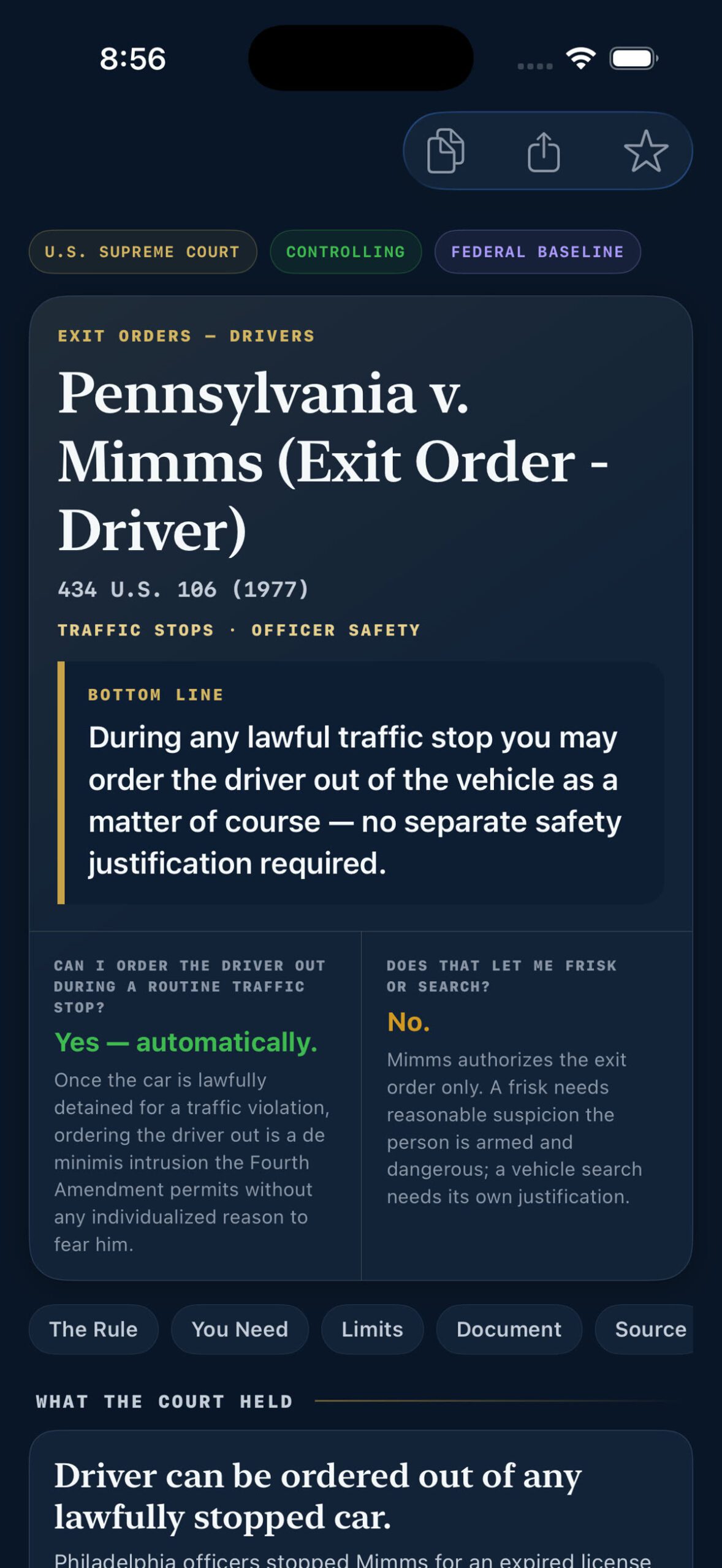
During any lawful traffic stop, the officer may order the driver out of the vehicle as a matter of course. No suspicion that the driver is armed or dangerous is required — the Court called the added intrusion of stepping out a minimal one once the car is already lawfully stopped.
Pennsylvania v. Mimms, 434 U.S. 106 (1977) — read the opinion on CourtListener.
What does Pennsylvania v. Mimms allow?
- Ordering the driver out of any lawfully stopped vehicle, automatically
- Doing so on every stop as routine practice — no case-by-case justification needed
What does it NOT allow?
- It does not authorize a frisk — a pat-down still needs reasonable suspicion the person is armed and dangerous
- It does not authorize a vehicle search — that needs its own justification
- The stop itself must be lawful; Mimms only applies once a valid stop exists
How it plays out on the street
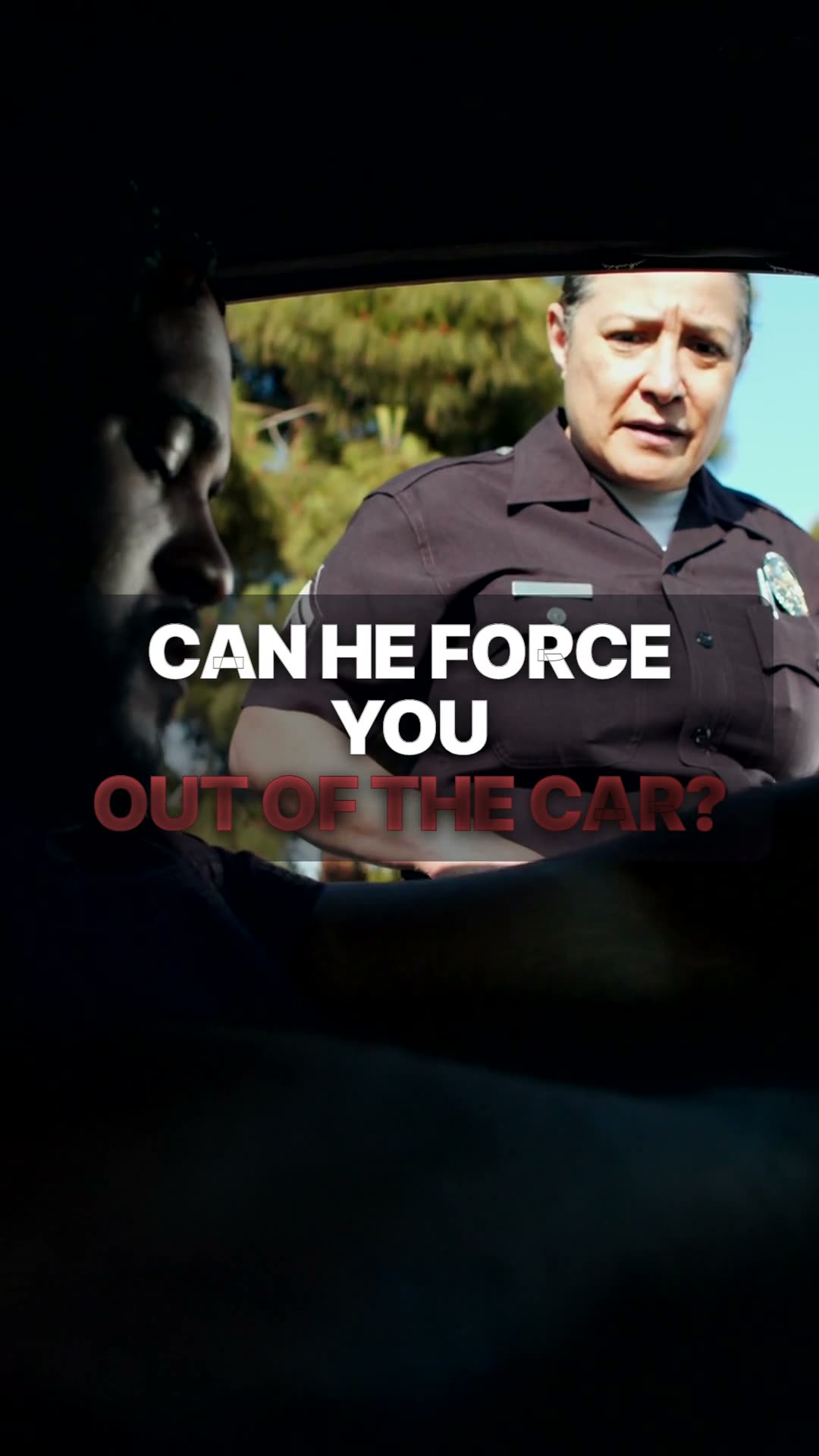
For officers, Mimms is an officer-safety tool, not a search tool: the exit order is free, everything after it must stand on its own legs. For drivers, refusing a lawful exit order is a losing argument — the place to contest a bad stop is court, not the shoulder.
Frequently asked questions
Can police order a driver out of the car without any reason?
Yes. Under Pennsylvania v. Mimms, once a vehicle is lawfully stopped, ordering the driver out requires no additional justification.
Does Mimms let the officer frisk the driver?
No. A frisk still requires independent reasonable suspicion that the person is armed and dangerous.
Does Mimms apply to passengers?
Not directly — but Maryland v. Wilson (1997) extended the same rule to passengers.
Related cases
- Maryland v. Wilson (1997): Can Police Order Passengers Out of the Car?
- Brendlin v. California (2007): Can a Passenger Challenge a Bad Traffic Stop?
- Arizona v. Gant (2009): Can Police Search Your Car After You’re Arrested?
Carry the rule, not the guesswork. Every case in StreetSense is broken down like this — bottom line, limits, and the exact citation — verified against the real opinion and available fully offline on shift. Start the free trial.
StreetSense is an educational reference for law enforcement, not legal advice. Federal cases set the floor — your state constitution, statutes, and department policy can impose stricter limits. Always follow your state’s rule and your agency’s policy.
Spot an error? Email nick@mnsindustriesllc.com with the post and your source. Corrections to the app go out over the air. How we verify.