You’re under arrest, cuffed in the back of the cruiser — and the officer starts going through your car. Arizona v. Gant rewrote this area of law and killed the automatic search.
What did Arizona v. Gant decide?
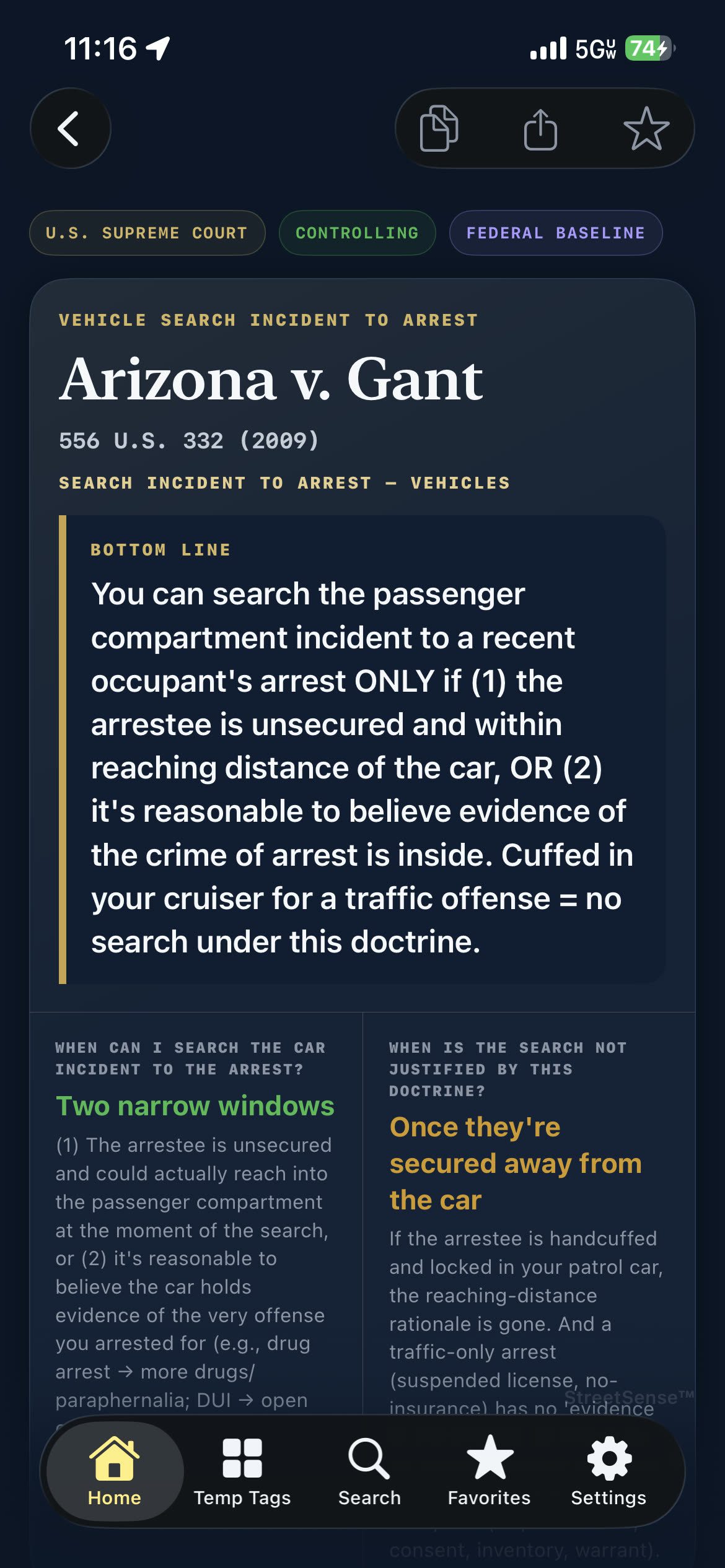
Police may search a vehicle’s passenger compartment incident to a recent occupant’s arrest ONLY if (1) the arrestee is unsecured and within reaching distance of the car at the time of the search, or (2) it is reasonable to believe the vehicle contains evidence of the offense of arrest. Cuffed in the cruiser for a traffic offense = no search under this doctrine.
Arizona v. Gant, 556 U.S. 332 (2009) — read the opinion on CourtListener.
What does Arizona v. Gant allow?
- Searching the passenger compartment while an unsecured arrestee could actually reach it
- Searching when it’s reasonable to believe the car holds evidence of the crime of arrest (e.g., a drug arrest)
What does it NOT allow?
- No automatic vehicle search just because someone was arrested
- A secured, cuffed arrestee eliminates the reaching-distance rationale
- Traffic-only arrests (suspended license, no insurance) have no ‘evidence’ to search for
- Other doctrines (consent, probable cause/automobile exception, inventory) must stand on their own
How it plays out on the street
Gant is the case that ended “arrest the driver, toss the car.” The two windows are narrow and fact-driven — document which one you’re in, or expect suppression.
Frequently asked questions
Can police search a car just because the driver was arrested?
No. Since Arizona v. Gant, an arrest alone does not authorize a vehicle search.
When can police still search a car after an arrest?
Only if the arrestee is unsecured and within reach of the car, or it’s reasonable to believe the car contains evidence of the offense of arrest.
Does Gant apply if the person is arrested for a traffic offense?
A traffic-only arrest supplies no evidence to look for, so the evidence prong almost never applies — and a cuffed arrestee defeats the reaching prong.
Related cases
- U.S. v. Robinson (1973): How Far Can a Search Go After an Arrest?
- Riley v. California (2014): Can Police Search Your Phone After an Arrest?
- Pennsylvania v. Mimms (1977): Can Police Order the Driver Out of the Car?
Carry the rule, not the guesswork. Every case in StreetSense is broken down like this — bottom line, limits, and the exact citation — verified against the real opinion and available fully offline on shift. Start the free trial.
StreetSense is an educational reference for law enforcement, not legal advice. Federal cases set the floor — your state constitution, statutes, and department policy can impose stricter limits. Always follow your state’s rule and your agency’s policy.
Spot an error? Email nick@mnsindustriesllc.com with the post and your source. Corrections to the app go out over the air. How we verify.