FULL KIT · LIVE
Washington law, in your pocket.
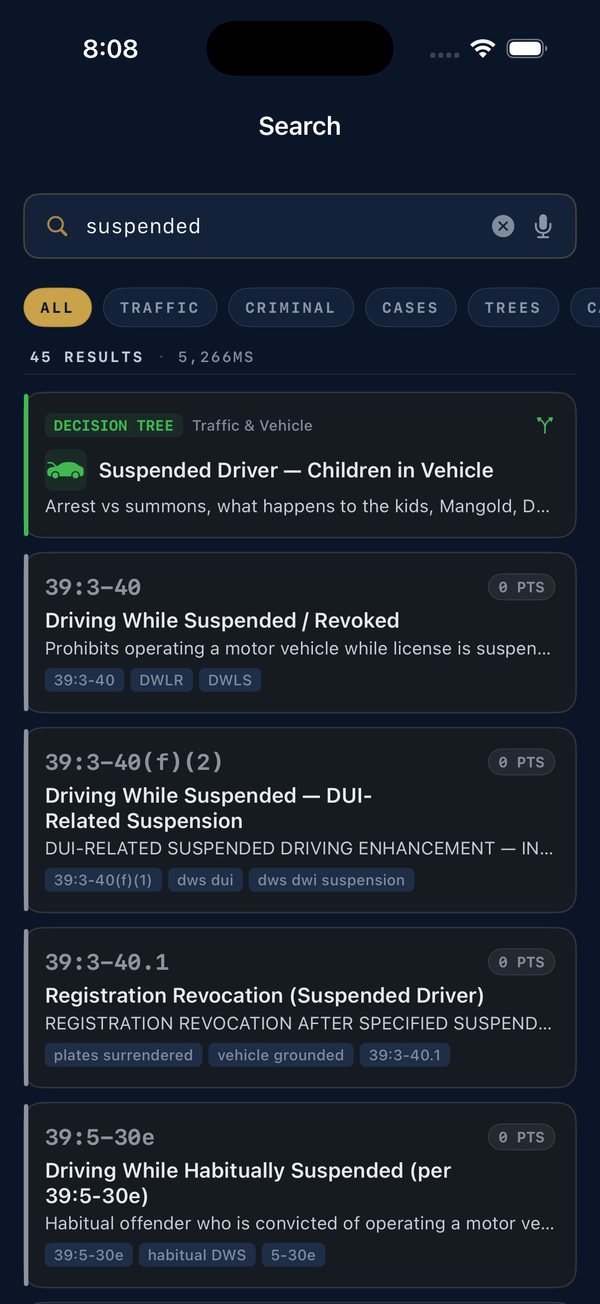
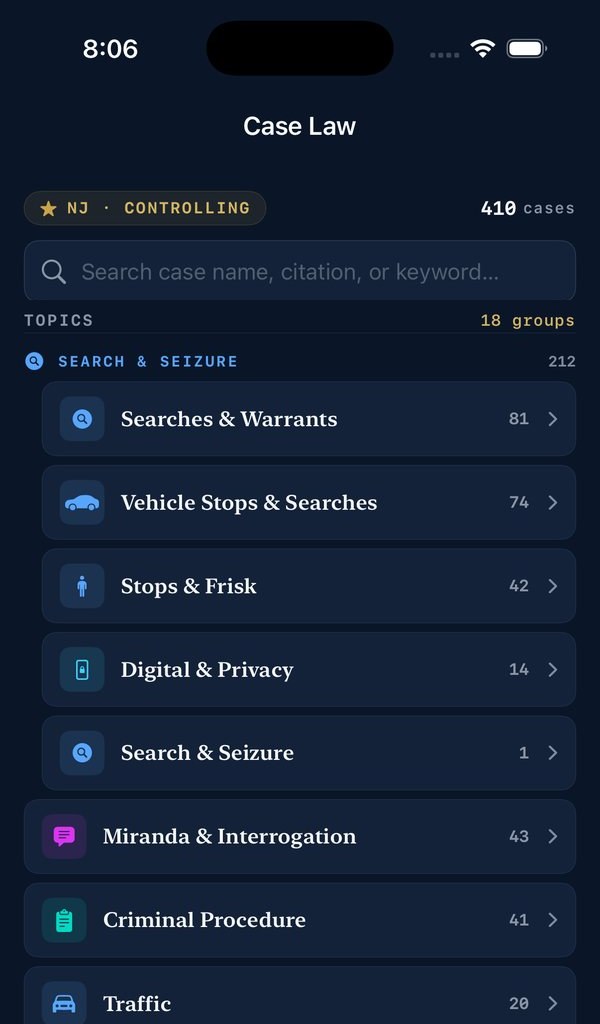
Washington criminal and traffic statutes, the Washington decisions that interpret them, and field guides that walk the call — built from published state sources, on your phone with no signal needed. Covers Title 9A RCW and Title 46 RCW.

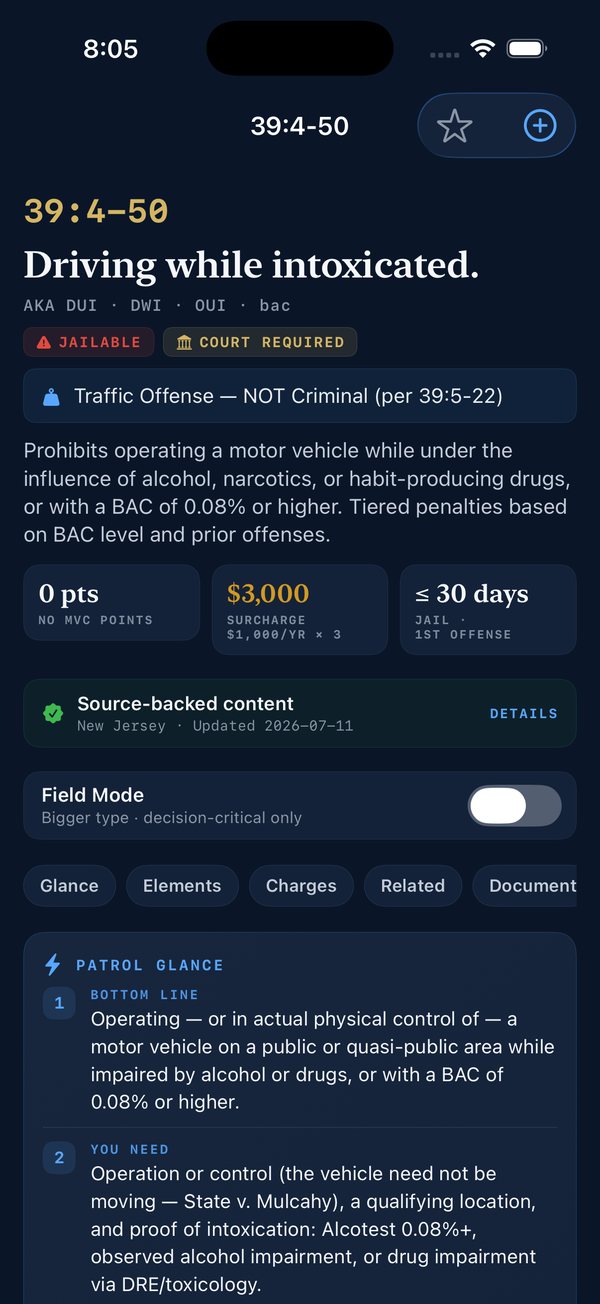
STATUTE DETAIL IN THE APP
(NEW JERSEY SHOWN — STATE PACKS RENDER THE SAME)
The rules that are Washington’s own.
Federal cases set the minimum. Washington’s courts have their own answers — and those are the ones that control your stop, your search, your report.
State v. Hendrickson
Hendrickson signed a work-release form consenting to searches of “vehicles used in going to and from work.” On February 15, 1992 he was arrested for leaving cocaine under an ash can outside the jail, his truck was seized for forfeiture and parked in the jail lot, and he was moved to another county’s jail and never went back on work release. Four days later, acting on an anonymous tip that more cocaine was hidden in the truck’s speaker vent, deputies searched it without a warrant on the strength of that old form. The Supreme Court held his termination from the work-release program terminated the consent automatically — no act of revocation required — even though no one had formally removed him from the program. No other exception applied, so the half-ounce should have been suppressed and the possession-with-intent conviction was reversed.
917 P.2d 563READ THE OPINION →
State v. Acrey
After a VALID Terry stop, the community-caretaking function can justify briefly holding a young, unsupervised juvenile — here, the minutes it took to phone his mother — when he’s alone, late at night, in an isolated area. It must stay brief and caretaking-driven, and it can’t be a cover for a criminal investigation.
64 P.3d 594READ THE OPINION →
State v. Franco
Washington’s DUI statute states one crime committable by alternative means (per se BAC, impairment, or combined influence), and the implied-consent law survives constitutional challenge — the Court found no violation of the driver’s rights.
639 P.2d 1320READ THE OPINION →

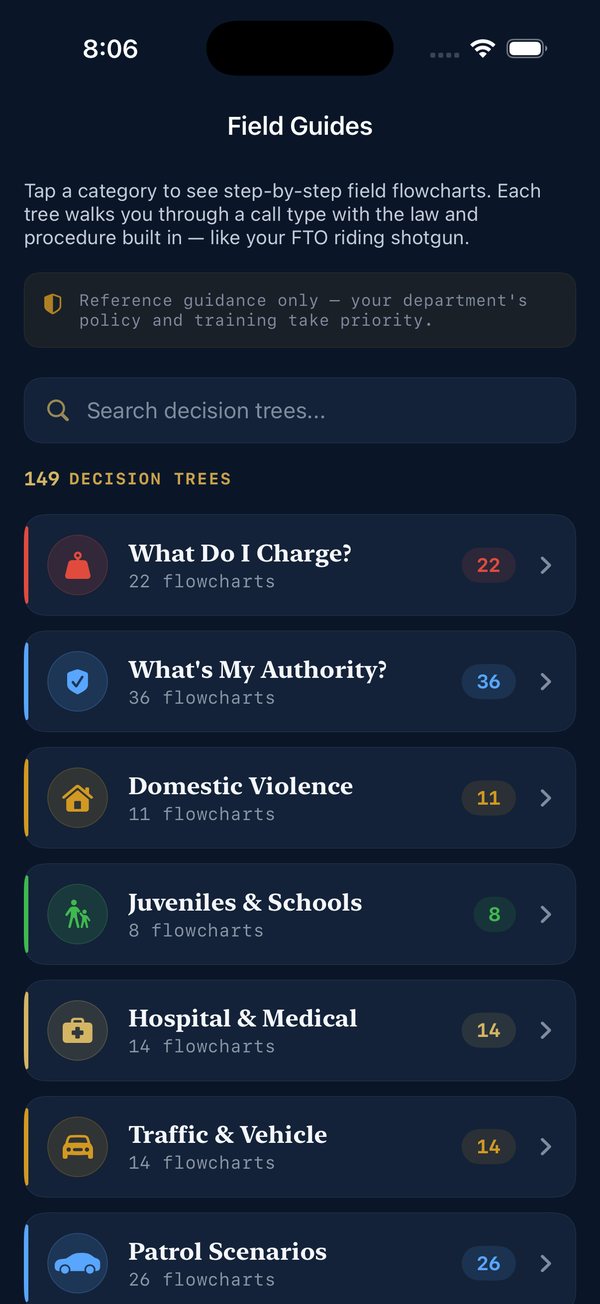
FIELD GUIDES — STEP-BY-STEP FLOWCHARTS
The call, one decision at a time.
DV, juveniles, hospital holds, use of force, traffic — each guide walks the fork in the road with the Washington law and procedure built in, the way an FTO would talk you through it.
Washington paper plates, decoded.
Which format is this?
New-format (6/29/2023+) OR old-format. Old-format permits are INVALID as of 9/1/2023 regardless of printed expiration.
Run via E-Permitting
Permit info is accessible via the Washington E-Permitting System. Query the permit number.
Mounting location
New-format permits mount where the permanent plate would go — NOT the rear window. Wrong mount = violation and may indicate counterfeit.
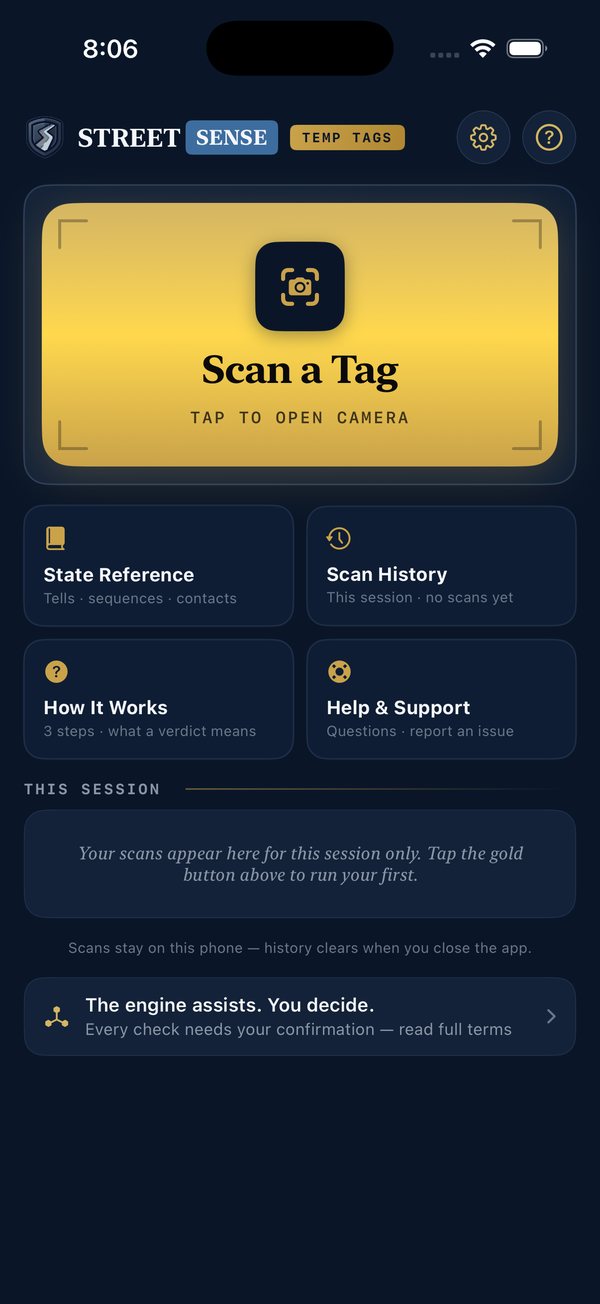
The temp-tag scanner is free for verified law enforcement — with or without a subscription. SEE HOW THE SCANNER WORKS →
Federal cases that reach every Washington stop.
Pennsylvania v. Mimms (1977)
Ordering the driver out on a lawful stop — what it covers, and what it doesn’t.
Arizona v. Gant (2009)
Once the arrestee is secured, the automatic car search is gone. The two narrow windows that remain.
Riley v. California (2014)
Seizing the phone is one question. Searching its data is another.
Cross the line, keep the reference.
Task force, bi-state agency, or a beat near the border — every state gets the same breakdown, and the FEDERAL KIT travels with you.
The Washington kit. Free trial available.
Full Patrol Kit $24.99/yr · Essentials $9.99/yr · Lifetime $69.99 once — SEE PRICING →
Counts reflect the current Washington content pack, are not guaranteed, and change with each content release. DEPARTMENT LICENSING →